Connection between meanings of Sadyojata & principles of Ayurveda
"The Harmonious Dance: Exploring the Sacred Connection between the meanings of Sadyojata and principles of Ayurveda for Balance, Renewal, and Nurturing Well-being."
ACHARA RASAYANASPIRITUAL READING


This article delves deep into fascinating correlation between Ayurveda and the name of our platform, Sadyojata. The name Sadyojata was chosen for our Ayurveda health platform website due to its deep connection to Ayurvedic principles and the essence it represents.
Derived from ancient Sanskrit texts, Sadyojata, symbolizes the profound essence of Ayurveda and embodies its timeless relevance in our modern lives. Join us on a journey that uncovers the significance of Sadyojata in the realm of Ayurveda.
Sitting majestically amidst the towering Himalayas, at the source of the river Ganga, is the divine form of Sadashiva, the ever-auspicious Lord Shiva with five faces. These faces - Ishana, Tatpurusha, Aghora, Vamadeva, and Sadyojata - radiate the qualities of grace, sensory sublimation, omnipresence, omnipotence, and omniscience, respectively.
This depiction symbolizes the captivating presence of Sadyojata as one of Lord Shiva's omniscience aspect just like the essence of Ayurveda, conveying the profound wisdom of ancient healing system and upholding its cherished values. Through Ayurveda we connect with inner selves, and lead a harmonious, balanced life in alignment with nature.
The meanings and interpretations of Sadyojata are diverse, with the significance and symbolism varying depending on different philosophical, religious, mythological, or cultural contexts. However, a common thread that unites Sadyojata and principles of Ayurveda is their shared emphasis on balance, rejuvenation, the nurturing of physical and spiritual well-being, and the intricate interplay of elemental energies.
Note : 1) “” – Connotations associated with Sadyojata 2) Bold letters – Connection between Sadyojata and principles of ayurveda
Instant connection with Nature:
Sadyojata is connected to the “material aspect” of creation. Among the five primary aspect or forms of Lord Shiva, known as the Pancha Mahabhutas (foundation of life) or the Five Great Elements where Each form corresponds to an element. Sadyojata represents the element of Earth (Prithvi) aligns with essential Ayurvedic principles, as it represents stability, grounding oneself, and nourishment needed for physical health and vitality.

Instant Healing:
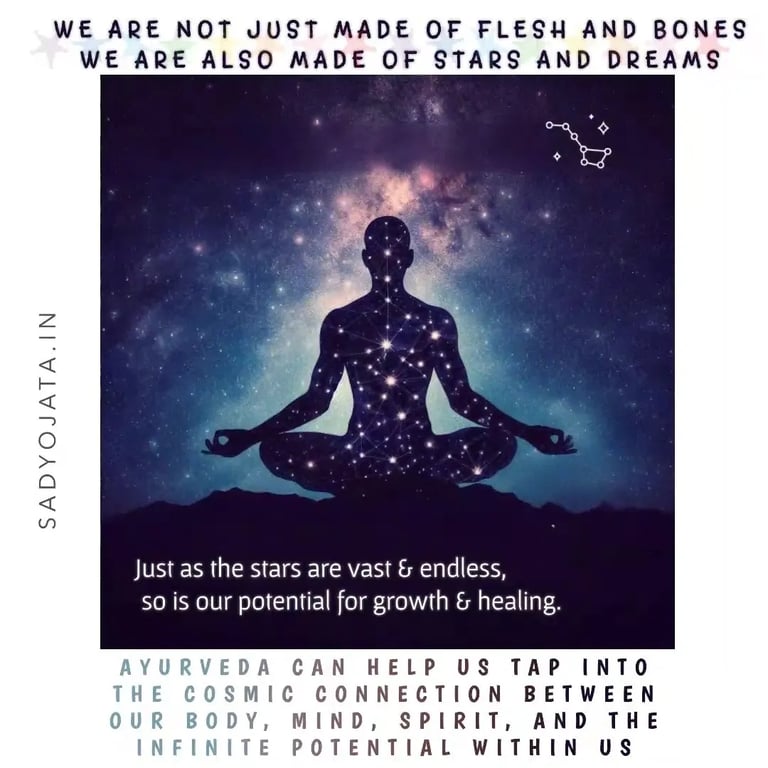
Sadyojata's "immediately manifesting" (In sanskrit "sadya," meaning "immediate" or "current," and "jata," meaning "born" or "produced.") nature aligns with Ayurveda's personalized healing approaches that bring about an immediate and long-lasting effect by understanding the interconnectedness between the Sharira (Body), Manas (Mind), and Atma (Spirit). Ayurveda views the body as a microcosm of the universe, composed of the five elements (earth, water, fire, air, and ether) that correspond to the doshas (Vata, Pitta, and Kapha). Ayurveda emphasizes the importance of maintaining balance among the elemental energies (doshas) within the body which directly exhibit the impact of our choices on our physical health and spiritual well-being. Just as Sadyojata represents the swift creation, Ayurveda has swift healing potential when applied correctly.
Transformation and renewal:
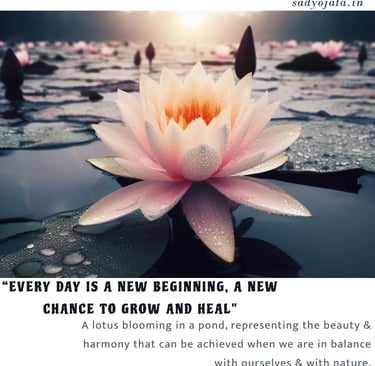
Both Sadyojata and Ayurveda promote the idea of constant renewal. Sadyojata's aspect of being "ever-new" and the constant cycle of creation, destruction, and rebirth resonates with Ayurveda's understanding of the body's ability to heal and regenerate. Ayurveda recognizes the body's innate intelligence and provides principles and promotes practices to support the body's natural healing and rejuvenation processes.
Holistic approach:
Furthermore, Sadyojata's emphasis on “facing forward and being present” aligns with Ayurveda's principles of mindfulness and being in the present moment. Ayurveda encourages individuals to cultivate awareness and make conscious choices (like what we eat?, How we eat?, how we sleep? Etc.) that support their well-being in the present, recognizing that the choices we make today shape our health in the future.
Divine symbolism:
Both Sadyojata and Ayurveda emphasize the aspect of giving and providing nourishment. Sadyojata is associated with quality of “generosity” and providing sustenance, while Ayurveda recognizes the importance of proper nutrition and nourishing the body with wholesome foods, herbs, and lifestyle practices. Both signify nurturing and nourishing the physical body for optimal health and vitality. This interpretation highlights the importance of selflessness and generosity in one's actions and relationships.
In summary, the “Diverse meanings” associated with Sadyojata and the principles of Ayurveda converge through their shared focus on balance, renewal, staying grounded, nurturing of physical and spiritual well-being, and the interplay of elemental energies. Both acknowledge the importance of stability, the immediate impact of our choices, the body's ability to heal and regenerate, and the importance of nourishing the body and mind for optimal health and vitality. By embracing these principles, one can strive to lead a balanced, healthy life in harmony with the rhythms of the universe experience a peaceful connection with the natural world.