
Foods to Avoid Eating Daily: Their Negative Effect on Body & Mind
I'm often asked "Hey doc, are there any foods I should avoid on the regular?" And my answer is always "YES!"

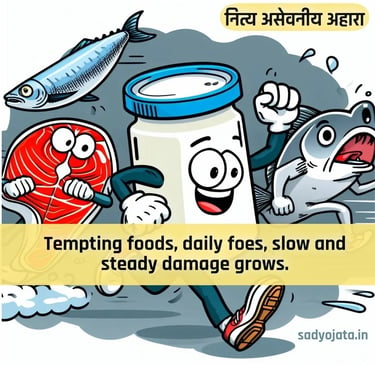
Let me tell you about one of my client who found out the hard way. This busy professional was constantly complaining of gas, bloating and low energy. After reviewing her diet, it was clear as day - her lunch staples of Cold salads, Paneer masala and dry muesli were weighing her down!
Once she laid off the heavy legumes and dairy, it was like a dense fog lifted. She felt lighter, brighter and ready to take on the world again!
The moral of the story? Some foods that seem "healthy" can actually dampen your inner fire over time. In this post, I'll share the Ayurvedic no-no's that are best minimized for optimal digestion and vibrant energy (Swasthya (good health)).
According to Charaka Samhita, certain foods can be harmful to the body when consumed excessively or on a regular basis. These foods are known as "Forbidden foods" and should be avoided whenever possible.
What You Should Know About Forbidden Foods in Ayurveda
These unwholesome foods, cause digestive problems, dosha-imbalances, or illnesses if consumed regularly. They pose negative effects on both body and mind. (Shareerika and Manasika Doshas)
These foods that cause inflammation by accumulation of toxic metabolic end products (Ama), disturb normal physiological functions in the body e.g., mucus production, hormonal imbalance, weight gain resulting stress on knee joints (causing arthritis) and many other manifestations which are caused by disturbed energies that govern the body (Doshas) due to contrary properties to the nature of body.
Why are These Foods Forbidden for daily consumption in Ayurveda?
What is the Modern Perspective on These Foods?
Nitya Asevaneeya Ahara: Forbidden Regular Food Articles (Charaka samhita Matrashiteeya Adhyaya)
Verse 10:
"वल्लूरं शुष्कशाकानि शालूकानि बिसानि च| नाभ्यसेद्गौरवान्मांसं कृशं नैवोपयोजयेत्||"
Translation: One should not be habitual to take dried meat, dried vegetables, tuber of lotus and stalk of lotus as these are heavy to digest. One should never eat meat of an emaciated animal.
Dried Meat (Vallura):
Meat that has been preserved by removing moisture, either by salting, smoking, or dehydrating. Examples of dried meat include jerky, salami, ham, and bacon.
Dried Vegetables (Shushka Shakha):
Vegetables that have been preserved by removing moisture, either by sun-drying, oven-drying, freeze-drying or even kept in the kitchen for a very long time.
Ayurvedic Perspective:
These foods are considered heavy to digest. Ayurveda categorizes foods based on their qualities (Guna), and heavy or hard-to-digest foods (Guru) can lead to the accumulation of ama (toxins) in the body. It also aggravate the doshas and cause diseases. Dried meat and vegetables are particularly challenging to digest and Consuming regularly could potentially lead to gastrointestinal discomfort.
Modern Perspective:
Dried meats : often contain high levels of sodium, unhealthy preservatives, and saturated fats, which are associated with cardiovascular problems and high blood pressure when consumed excessively.
Dried meats may also increase the risk of certain cancers due to the formation of carcinogenic compounds during the preservation process. (Study found that people who ate the most processed meats, including dried meats, had a 18% higher risk of colorectal cancer than those who ate the least.)
Dried vegetables: Dehydrated veggie may lose some of their essential nutrients in the drying and storage processes. Consuming them in excess deprive your body of vital vitamins and minerals. May also contain added sugars or sulfites, which can cause allergic reactions or dental problems.


Tuber and Stalk of Lotus (Shaluka & bisa):
Parts of the lotus plant that are edible. ( Nelumbonaceae / Nymphaeaceae )
Ayurvedic Perspective:
Shaluka and Bisa (Lotus parts) are heavy (Guru guna) and can be hard to digest. Consuming habitually can weaken the digestive fire (agni) and disrupt the body's natural balance by causing gas, bloating, or constipation.
Modern Perspective:
The stalk of the plant may also contain indigestible components cause of polluted water where Lotus are grown these days. While these are blooming in food menus in restaurants in India, places where they are cultivated and how they are processed is to be considered to avoid habitual consumption of Lotus tuber and stalk.
Emaciated Animal Meat (Krusha mamsa):
Meat from animals that are thin, weak, or malnourished. Includes meat from starving animals or animals with diseases.
Ayurvedic Perspective:
Ayurveda emphasizes the importance of consuming meat that comes from healthy animals. Meat from emaciated animals lacks nourishment (Rooksha) and is considered unhealthy and harder to digest. It is also believed to lack the vital life force (prana) found in healthy animals. It may also carry infections or toxins (Dooshi visha) that can harm health in later days.
Modern Perspective:
Emaciated animal meat offers little nutritional value and can contribute to deficiencies. Emaciated or sick animal meat may also be contaminated with antibiotic residues, bacteria, parasites, or chemicals that can cause foodborne illnesses.
Verse 11:
"कूर्चिकांश्च किलाटांश्च शौकरं गव्यमाहिषे| मत्स्यान् दधि च माषांश्च यवकांश्च न शीलयेत्||"
Translation: One should not be habitual to take coagulated milk, cream-cheese, pork, meat of cow and buffalo, fish, curd, black-gram, and wild-barley.
Coagulated Milk (kūrcikā):
Milk that has been curdled or clotted by adding an acidic substance (such as lemon juice or vinegar) or by heating it. Examples of coagulated milk products include cheese, paneer, cottage cheese, sour cream, and yogurt.
Cream Cheese (Kilata):
A soft cheese made from cream and milk that has been coagulated with rennet or lactic acid bacteria.
Curd/Yogurt (Dadhi):
Fermented dairy product made from milk that has been inoculated with lactic acid bacteria.
Ayurvedic Perspective:
Coagulated milk, cheese overload the digestive system and lead to discomfort on regular consumption. They may not be suitable (Satmya) for everyone. Coagulated milk may also increased mucus production (Dushta kapha) and aggravate respiratory problems. Cream cheese, Curd may also cause congestion and inflammation in the body (Shotha). While curd may be difficult to digest when consumed with certain foods (Viruddha ahara).
Modern Explanation:
Coagulated milk products like cheese can be high in saturated fats and unhealthy cholesterol, contributing to weight gain and heart-related issues if consumed excessively.
Curd/yogurt are nutritious but to be consumed in moderation, if consumed daily causes digestive discomfort and allergies. It contains Lactose, which can increase instances of diarrhea. Another reason is that some people (even IBS) are also lactose intolerant. For these people, yogurt can make symptoms worse, including stomach pain, bloating, and gas. Cream cheese may also contain additives or artificial flavours that affect health negatively.
Pork (Śūkara):
The meat from pigs that are raised for human consumption. Pork includes various cuts such as chops, ribs, ham, bacon, sausages, etc.
Meat of Cow and Buffalo (Go Mahisha):
The meat from cattle and buffalo that are raised for human consumption. Meat of cow and buffalo includes various cuts such as steak, roast, ground beef, etc.
Fish (Matsya):
The meat from aquatic animals that are caught or farmed for human consumption. Fish includes various types such as salmon, tuna, cod, etc.
Ayurvedic Perspective:
These meats (beef, pork) are traditionally avoided, possibly due to cultural and religious beliefs.
These meats are also considered heavy (Guru) believed to be tamasika (dull and negative in nature) and incompatible with dairy products (Viruddha) making it difficult for digestion unless if its habituated since birth to the body (Satmya). Beef being Fiery (Ushna) and fish potentially aggravate kapha dosha (bio-energies) (Param kaphakaram) leading to weight gain, lethargy, and congestion. Pork also contain parasites or toxins that can cause diseases. Fish may also cause allergic reactions or imbalances in some mesomorph (Pitta prakruti person).
Modern Explanation:
Lean cuts of these meats can be part of a balanced diet, but excessive daily consumption may lead to health issues.
Processed pork products like bacon and sausages are high in sodium and saturated fats, potentially increasing the risk of heart disease. When it comes to pork liver is at risk. Pork may also contain harmful bacteria such as Salmonella or E. coli that can cause food poisoning.
These meats specially beef may contain antibiotics residues that can affect health adversely. Posing higher risk for heart disease, cancer, diabetes, and premature death.
Fish is an excellent source of omega-3 fatty acids and protein. However, certain types may contain mercury, so moderation are recommended. Fish may also be contaminated with pollutants or microplastics that can affect health negatively.
[ In fact, in 2015, the World Health Organization (WHO) cancer agency classified red meat as “probably carcinogenic to humans.” They also classified processed meat as “carcinogenic to humans,” ]
Black gram/Black lentil (Masha):
also called urad dal.
Ayurvedic Perspective:
These are believed to be difficult to digest. They also cause gas, bloating, or acidity (Pittakara Ushna).
Modern Explanation:
Black gram (urad dal) should be consumed in moderation to prevent digestive discomfort.
Black gram may contain antinutrients such as phytic acid, which can reduce the absorption of minerals. (13.7 mg/g being highest in all grain legumes)
Wild Barley (Yava):
A type of cereal grain that grows in the wild and is related to cultivated barley. Wild barley is also known as Hordeum spontaneum.
Ayurvedic Perspective:
Barley may not be suitable for regular consumption due to its properties. They cause dryness (Rooksha) or roughness (Khara) in the body, but it can be consumed more oftenly in diabetic conditions.
Modern Explanation:
Barley is a nutritious whole grain, but if consumed excessively, it might lead to gastrointestinal discomfort due to presence of fructane which cant be digested in humans
Barley may also contain gluten, which can cause intolerance or allergy in some people.
Now you know why dried meats, cold salads, and even sun dried tomatoes, dry fish pickle can gum up the works if eaten regularly. Consider this your guide to eating according to YOUR unique body type.
While some of these unwholesome foods may be tempting, it is important to remember that they are forbidden for a reason. Consuming these everyday can have negative impact on Physical, Mental and emotional Well-being. Some of these foods may have health benefits when consumed in moderation, while others pose health risks when consumed excessively or improperly.
Therefore, it is important to be aware of the effects of different foods on your body and mind, and choose your diet wisely.
Ditch the dietary dread and tune into what truly nourishes you.
How to Make Your Diet More Suitable for Your Body Type and Needs?
Each person has a unique constitution or prakriti (Ectomorph, Mesomorph, Endomorph), which is determined by the proportion of the three doshas (vata, pitta, and kapha) in their body. The doshas influence the physical, mental, and emotional characteristics of a person.
By understanding your Prakriti/Constitution, you can choose foods that are compatible with your body type and needs. You can also avoid foods incompatible with your dosha or which aggravate it.

Some general guidelines for avoiding foods according to your dosha:
Vata:
Vata is the energy of movement and creativity. People with a dominant vata dosha tend to be thin, light, agile, energetic, restless, and imaginative. They may also be prone to anxiety, insomnia, dryness, and constipation. They should avoid foods that are cold, dry, light, or hard to digest.
Examples of such foods are raw vegetables, salads, beans, popcorn, crackers, and frozen desserts.
Pitta:
Pitta is the energy of transformation and intelligence. People with a dominant pitta dosha tend to be medium-built, muscular, sharp, passionate, competitive, and courageous. They may also be prone to anger, inflammation, acidity, and ulcers. They should avoid foods that are hot, spicy, sour, or salty.
Examples of such foods are chili peppers, vinegar, pickles, cheese, meat, and alcohol.
Kapha:
Kapha is the energy of stability and structure. People with a dominant kapha dosha tend to be large-built, strong, calm, loyal, and compassionate. They may also be prone to sluggishness, weight gain, congestion, and diabetes. They should avoid foods that are heavy, oily, cold, or sweet.
Examples of such foods are wheat, rice, pasta, bread, bananas, dates, cheese, butter, and ice cream.
"Steer clear of these foods to avoid digestive woes,
lifestyle diseases starts and more joyfulness departs."
Conclusion
By following these guidelines, you can tailor your diet to suit your body type and needs. However, you should also consider other factors such as your age, season, climate, health condition, and personal preferences when choosing your foods. You should also consult a qualified Ayurvedic practitioner or nutritionist before making any major changes to your diet.
Remember, You are what you eat!
"Let's unlock your inner glow and skip
the foods that make you feel slow!"
Happy Reading
Dr Sripritha R (Doctor of Medicine)